Retail Systems Study
Shelf Organization / Inventory Visibility Design Study
Visual management and replenishment-priority design study for faster inventory decisions
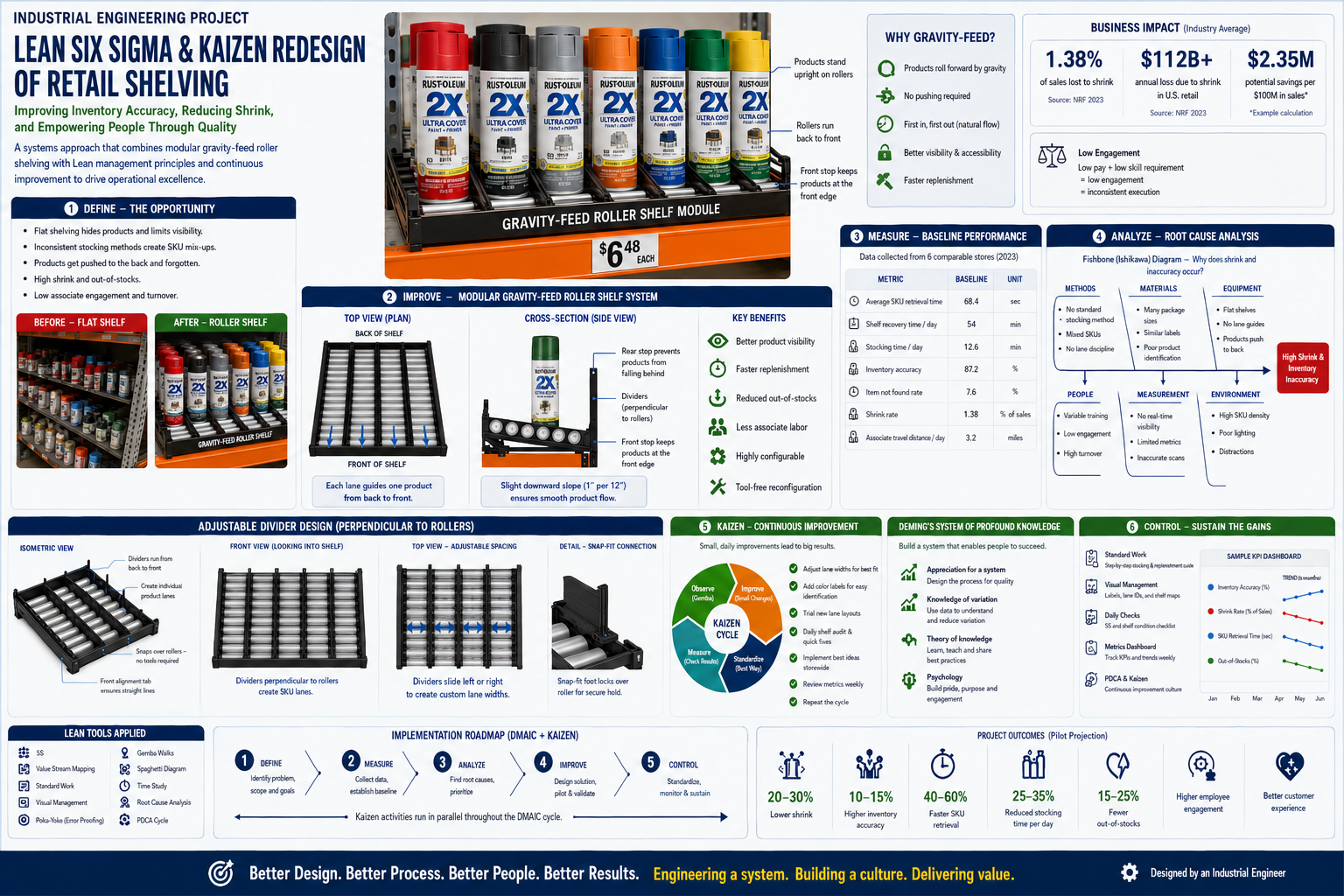
Engineering study focused on shelf logic, inventory visibility, and visual control methods that support faster replenishment decisions, less searching, and more consistent floor execution.
Problem
When shelf organization and inventory visibility are inconsistent, teams spend excess time identifying stock gaps, verifying product condition, and deciding what should be replenished first.
Current State
- Shelf condition is often interpreted through repeated visual checks instead of clear visual signals.
- Teams rely too heavily on memory and judgment to assess stock condition and urgency.
- Replenishment prioritization slows down when product status and triggers are not immediately visible.
Observed Issues
- Repeated visual checking before action
- Dependence on memory for stock condition and urgency
- Slow replenishment prioritization
- Inconsistent visual cues across storage locations
Engineering Methods
- Visual workflow analysis
- Inventory observation
- Current-state process review
- Process design thinking
- Root cause analysis
Proposed Solution
- Standardize shelf organization to make stock condition easier to interpret
- Introduce clearer visual cues for product visibility and replenishment status
- Define simpler replenishment triggers that reduce ambiguity in daily execution
Expected Impact
- Faster identification of stock gaps and replenishment priorities
- Improved inventory visibility at the point of use
- More efficient floor execution with less searching and rechecking
- Stronger consistency in daily replenishment decisions
Media and models
Project Materials
Supporting materials that help show the design concept, analysis, and engineering direction behind this case study.